Have you ever watched your dog follow an interesting scent on a walk and wondered what they might be able to achieve if they were given the opportunity to really put their nose to work?
That’s essentially what pet trailing is all about!
Pet trailing, sometimes also known as mantrailing, is a fun and rewarding scent-based activity where dogs learn to follow the unique scent trail left behind by a particular person or animal. Using their incredible sense of smell, dogs work to locate someone who has walked away and hidden somewhere nearby.
It’s an activity that allows dogs to do something that comes naturally to them, but with a little structure, teamwork and plenty of opportunities to succeed.
At Nose to Trail Pet Behaviour Services, we deliver pet trailing sessions using the methods and principles of The Canine School of Trailing (TCSOT). Our approach is centred around allowing dogs to use their noses, work independently and enjoy the process of following a scent.
And the best bit? You don’t need an experienced scent dog to get started. Complete beginners are very welcome!
So, how does pet trailing actually work?
Imagine arriving at a session with your dog. You meet the other participants, get your equipment ready and are introduced to the person your dog will initially be searching for.
That person then walks away, leaving behind a trail of their individual scent.
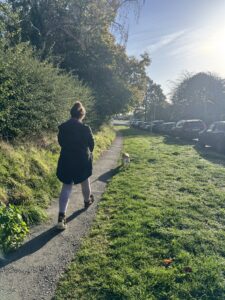
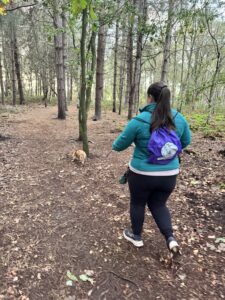
Your dog is given the opportunity to investigate the starting area, pick up the scent and begin following it. With their nose close to the ground, they’ll work their way along the trail, making decisions about which direction to take and where the scent leads.
Eventually, they’ll find their missing person!
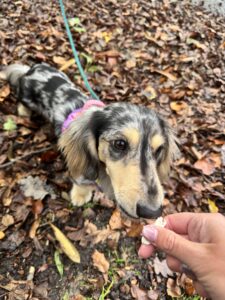
The person they find is known as the ‘runner’, and their job is to make themselves available for the dog to locate and provide a rewarding end to the search.
Every dog approaches trailing differently. Some are immediately confident and enthusiastic, while others take a little more time to work things out. That’s absolutely fine. We work at the dog’s pace and build their experience through successful, enjoyable searches.
We aren’t looking for perfection. We’re looking for dogs who are having fun and learning to trust their noses.
How is our approach to trailing different?

There are lots of different ways to teach trailing, and if you’ve watched videos online, you may have seen some dogs being held back in their harnesses, encouraged to become increasingly excited and then released to run towards a person who has disappeared.
That’s not how we work.
At Nose to Trail, following TCSOT methods, we don’t hold dogs back in their harnesses, wind them up or deliberately build frustration before sending them off to search.
Instead, we want dogs to get their noses down and start using their natural scenting abilities from the very beginning.
We give dogs the opportunity to investigate, follow scent and work through the trail at a pace that suits them. We want them to develop confidence and become increasingly comfortable making their own decisions.
This means trailing isn’t about creating excitement or getting the dog into a heightened emotional state. It’s about providing an opportunity to engage in a natural behaviour in a structured and rewarding way.
For us, seeing a dog quietly working with their nose down, following a scent and successfully finding their runner is far more important than how fast they get there!
Why is pet trailing so beneficial for dogs?
One of the reasons I love trailing is that it offers dogs so much more than simply learning to find someone.
Dogs experience the world predominantly through their noses. Scent provides them with an enormous amount of information, and sniffing is an important natural behaviour.
Pet trailing gives them a dedicated opportunity to use this incredible ability.
Some of the benefits include:
Mental enrichment
Following a scent trail requires concentration, problem-solving and decision-making. Dogs are actively processing information and working things out for themselves.
Confidence building
Successfully following a trail and locating a person can be incredibly rewarding. For dogs who are naturally cautious or lack confidence, having the opportunity to work independently and achieve something can be a wonderful experience.
Natural stress reduction
Sniffing and engaging in scent-based activities can support relaxation and provide an outlet for natural behaviours. Rather than constantly asking dogs to watch us, respond to cues or interact with their surroundings, trailing allows them to focus on something they find inherently rewarding.
Independence and choice
We want dogs to become confident in following their noses and making decisions. They aren’t simply being directed around a course; they’re actively participating in the search.
A fantastic way to spend time together
Although your dog is doing much of the searching independently, you’re still working as a team. Learning to read your dog’s body language, recognise when they’ve picked up a scent and understand how they communicate through their behaviour can be fascinating.
And, of course, it’s enormous fun!
Is pet trailing suitable for reactive or nervous dogs?
Absolutely. In fact, this is one of the reasons I became so passionate about incorporating trailing into my behavioural work.
One of the biggest misconceptions about dog activities is that dogs need to be comfortable around other dogs, confident in busy environments or particularly sociable to take part.
That simply isn’t the case with our trailing sessions.
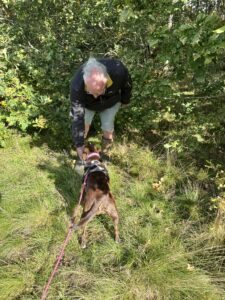
At Nose to Trail, we regularly welcome dogs who are reactive, nervous, worried about unfamiliar people or who simply prefer their own space.
Trailing can be particularly valuable as part of a wider behavioural recovery programme because it gives dogs an opportunity to engage in something positive without the emphasis being on interacting with other dogs or people.
Instead, they have a job to do!
We can use trailing to provide mental enrichment, encourage confidence, offer opportunities for independent exploration and help dogs build positive experiences outside their usual routines.
Our sessions are carefully managed, with dogs taking turns rather than all working together. This allows us to accommodate individual needs and give each dog appropriate space.
It’s important to remember that trailing isn’t a replacement for a behaviour modification programme, and it won’t magically resolve reactivity. However, it can be a really useful addition to a dog’s wider support and enrichment plan.
Some of the dogs who benefit most from trailing are those who might otherwise struggle to access traditional group dog activities.
You don’t need a sociable dog to enjoy trailing. You just need a dog with a nose!
What happens during a Nose to Trail pet trailing session?
Our sessions are designed to be relaxed, sociable and, most importantly, fun for both dogs and their humans.
We generally work with a maximum of four dogs over a two-hour session.
During that time, dogs take turns in a variety of roles, so there’s plenty to learn even when your dog isn’t the one actively following a trail.
These roles include:
1. The trailer
This is your dog’s opportunity to follow a scent trail and locate their missing person. They’ll be using their nose to work out where the person has gone, following the trail and eventually finding them.
2. The runner (missing person)
Sometimes you get to be the missing person or on “lost dog duty”! You’ll walk away from the group and be taken to somewhere to hide, leaving a trail for another dog to follow.
It’s a brilliant opportunity to see trailing from the other side and understand just how much information dogs can gather from scent.
3. The observer
When another dog is working, you can follow along and watch. This is a fantastic learning opportunity, particularly when you’re new to trailing. You’ll start to recognise how different dogs approach a trail, how they use their noses and how their handlers learn to read them.
4. Guard dog duty!
Every good trailing team needs someone keeping an eye on the vehicles! When dogs aren’t actively trailing or acting as the runner, they can relax and watch the world go by from the safety of their own vehicle.
We make sure dogs have appropriate opportunities to rest between turns, so they’re not expected to be constantly working or interacting with one another.
With just four dogs and two hours together, there’s time to learn, have a laugh, support one another and enjoy watching the dogs do what they do best.
Do I need any experience to try pet trailing?
Not at all!
You don’t need previous scent work experience, a particular breed of dog or any special training beforehand.
Dogs of all shapes, sizes and ages can enjoy trailing, and we welcome complete beginners.
In fact, any of our two-hour sessions advertised on the Nose to Trail website can be suitable for someone wanting to try trailing for the first time.
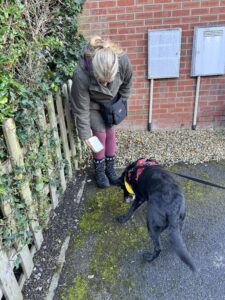
We’ll explain how everything works, introduce you and your dog to the activity and guide you through the process.
You don’t need to know what you’re doing before you arrive. That’s what we’re there for!
Pet trailing classes in Cheshire and Shropshire
Nose to Trail runs pet trailing sessions across Cheshire and Shropshire, with our main training locations including:
-
Audlem – sessions in and around the Audlem area.
-
Nantwich – opportunities to enjoy trailing around the Nantwich area.
-
Whitchurch – sessions serving Whitchurch and the surrounding Shropshire countryside.
Our locations and available dates vary, so the best place to find our current sessions is our online booking page.
You can find all our upcoming classes here:
https://nosetotrail.co.uk/classes
Look out for any two-hour session if you’re interested in giving trailing a try. Beginners are welcome!
A little bit about my own trailing dog, Rico!
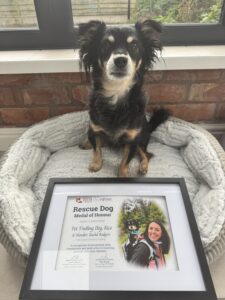
I couldn’t write about trailing without mentioning Rico, my own Portuguese rescue dog.
Rico is a fantastic example of just how much dogs can achieve when they’re given the opportunity to use their noses.
His scenting abilities have taken him beyond recreational trailing, and he has undertaken real work helping to locate lost pets. His work was even recognised with a BBC award!
It’s something I’m incredibly proud of, but it’s also a wonderful reminder that the skills we develop through trailing can be about so much more than finding a hidden person during a training session.
Of course, not every dog needs to become a working search dog. For many, the enjoyment comes from having an opportunity to sniff, explore, problem-solve and spend quality time with their human.
And that’s more than enough!
Ready to give pet trailing a try?
Whether you’ve got a confident, enthusiastic scent hound, a curious terrier, a nervous rescue dog or a dog who simply loves sniffing everything on their walks, pet trailing could be a fantastic activity to enjoy together.
You don’t need experience, you don’t need a particular breed and your dog certainly doesn’t need to be sociable with every other dog.
All you need is a dog, a harness, a willingness to have a go and a sense of adventure!
Take a look at our upcoming pet trailing classes in Audlem, Nantwich and Whitchurch and come and discover what your dog’s nose can do.
View upcoming sessions: https://nosetotrail.co.uk/classes
Have questions about whether trailing might be suitable for your dog? I’d be very happy to help. Drop me an email at info@nosetotrail.co.uk and we can have a chat.
I look forward to seeing what your dog can find!

